HDB to Condo Upgrade Guide
MOP rules, ABSD remission, CPF usage, timeline, and cost breakdown. Everything Singapore HDB owners need to know about upgrading to a private condo in 2026.
Can You Afford to Upgrade?
Before anything else, run the numbers. A typical HDB-to-condo upgrade requires you to cover the gap between your HDB sale proceeds and the new condo cost, plus stamp duties and mortgage affordability.
Typical Upgrade Math: $1.5M Condo
Purchase price$1,500,000
Downpayment (25%)$375,000
Buyer's Stamp Duty$44,600
ABSD (with remission)$0
Legal fees~$3,000
Total upfront$422,600
Minimum cash (5%)$75,000
Most upgraders use: HDB sale proceeds (cash + CPF refund) → condo downpayment. The gap is covered by new CPF contributions and savings.
The 4 Big Rules to Know
1. Minimum Occupation Period (MOP)
You must live in your HDB for 5 full years before selling or buying private property. MOP is counted from key collection, not the purchase date. Any overseas posting, subletting, or major life event doesn't reset it. But it also doesn't pause it.
2. ABSD Remission (Critical)
Singapore Citizen married couples buying a replacement property qualify for ABSD remission if they sell the existing HDB within 6 months of the new purchase (or 6 months after TOP for new launches). This saves you 20% of the new property price. On a $1.5M condo, that's $300,000.
Miss the window → pay ABSD in full. No extensions.
3. MSR vs TDSR
MSR (30% cap) only applies to HDB and EC loans. Once you move to a private condo, only TDSR (55% cap) applies, which is more generous. This means your upgrade affordability is often higher than your HDB loan would allow.
4. CPF Valuation Limit
You can use CPF OA up to the property's Valuation Limit. Beyond that, you need cash. Older buyers or longer loan tenures hit the limit faster. Plan your cash buffer accordingly.
Your HDB Upgrade Timeline
From first conversation to key collection — here's how the whole journey unfolds.
Week 1
Talk to Jet
Have an honest conversation about your situation — budget, timeline, family needs, and goals. Jet will assess whether upgrading makes sense right now, or if it's better to wait. No commitment, no pressure. Just clarity.
Weeks 2–4
Affordability Check
Get HDB valuation, bank IPA (In-Principle Approval), CPF balance, and calculate total upfront + monthly commitments. Jet runs the numbers with you so there are no surprises later.
Months 1–3
List HDB & Find Buyer
Price correctly based on recent transactions. Over-pricing adds 2-3 months of delay. Jet handles the marketing, viewings, and negotiations.
Months 2–4
Condo Search (Concurrent)
Shortlist 5-10 units within budget. Attend showflats for new launches, viewings for resale. Jet compares PSF, project quality, and long-term value across options.
Months 4–5
Sign OTP & Align Timing
Align completion dates between HDB sale and condo purchase. For new launches, there's no rush — you sell HDB after TOP. Jet coordinates the timing so nothing falls through the cracks.
Months 6–11
Completion & Move In
HDB keys handed over, condo keys collected. Jet manages the handover end-to-end so you just show up for the good parts.
Using a Bridging Loan for Your Upgrade
A bridging loan is often the missing piece that makes an HDB-to-condo upgrade possible when timing doesn't align. Here's how it works:
What Is a Bridging Loan?
A short-term loan (typically up to 6 months) that bridges the gap between buying your new condo and receiving cash proceeds from your HDB sale. You use it to cover the downpayment shortfall on the new condo while your HDB sale is still completing.
When You Need a Bridging Loan
You sign OTP for a new condo before your HDB sale completes. Your HDB sale proceeds (cash + CPF refund) are needed for the condo downpayment, but they won't land in time. A bridging loan covers the gap.
Typical scenario: You found your dream resale condo and need to pay 25% downpayment in 4-8 weeks, but your HDB completion is 3-4 months away.
Two Types of Bridging Loans
1. Capitalised Interest Bridging Loan — No monthly repayments during the bridge period. Interest accrues and is paid as a lump sum when your HDB sale completes. Simpler cash flow but slightly higher total interest cost.
2. Simultaneous Repayment Bridging Loan — You pay interest monthly during the bridge period, then principal is paid off from HDB sale proceeds. Lower total interest but adds to your monthly outgoings.
How Much You Can Borrow
A widely-used formula: Cash Proceeds + CPF Refunds (Principal + Accrued Interest) = Max Bridging Loan. Banks typically assess the HDB flat's value at 80-85% of Current Market Value for bridging purposes, then subtract outstanding HDB loan and CPF refund to arrive at the max. Source: Darren Ong — bridging loan guide.
Interest Rates
Bridging loan rates are typically higher than regular home loan rates because of the short tenure and the loan being essentially unsecured until your existing property sale completes. Rates vary by bank and market conditions. Always get actual quotes from 2-3 banks — don't rely on rule-of-thumb estimates. Total interest cost is usually small in absolute terms because the bridge period is only a few months.
Key Requirements
- Signed Option to Purchase (OTP) for both the buy and the sale
- HDB valuation report to estimate sale proceeds
- HDB Sale Approval Letter
- Proof of income (bank still assesses your ability to service if sale falls through)
- Bridging loan is separate from your main condo mortgage — apply together with the main loan
Risks You Must Weigh Before Taking a Bridging Loan
- Your HDB sale could fall through. If the buyer pulls out or delays, you're stuck servicing both the bridging loan and your new mortgage simultaneously. The bank doesn't care why — you still owe them.
- HDB sale price may be lower than expected. If the market softens between when you committed to the new condo and when you actually sell, your bridging loan proceeds may not fully cover the shortfall. You'll need to top up from savings.
- Interest costs add up fast. Bridging loan rates are typically higher than regular mortgage rates. On a $300K bridging loan, even a few percentage points add up quickly over months. If the bridge stretches beyond the expected timeline, this eats into your upgrade budget. Always get actual rate quotes from banks.
- Double carrying costs. During the bridge period you may be paying: bridging loan interest + new mortgage + existing HDB loan + maintenance fees on both properties. Make sure your cash flow can handle the worst-case scenario.
- It's not free money — it's debt. A bridging loan makes the upgrade possible, but it also increases your total borrowing and risk exposure. Don't take it just because you can.
My advice: Only use a bridging loan if you have a signed OTP for your HDB sale (not just listed), a clear timeline, and at least 3-6 months of emergency cash reserves after accounting for all carrying costs. If in doubt, sell your HDB first and rent temporarily — it's safer even if less convenient.
Bridging loans are offered only by banks (not HDB). Most major banks in Singapore offer them, and terms vary — some charge higher rates but fewer fees, others the reverse. Always compare at least 2-3 bank quotes or use a mortgage broker. See the full bridging loan guide including the specialised EC Deferred Bridging Loan for EC upgraders.
HDB Resale vs New Launch: Which to Upgrade Into?
HDB Resale Condo: Move-in ready, you see what you're buying, known neighbourhood. But older building means possible renovation. Typical timeline: 3-4 months from OTP to key collection.
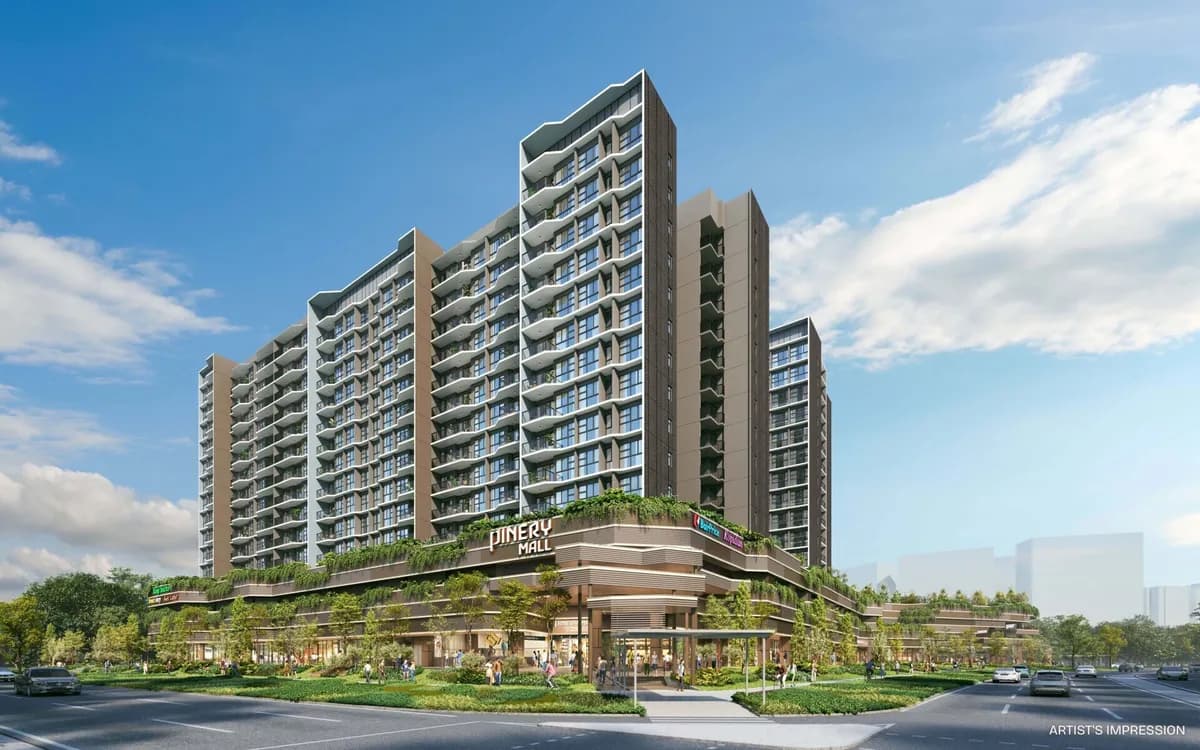
New Launch Condo: Brand new, modern facilities, often near MRT/schools for better long-term appeal. But 3-5 year wait for TOP and you're buying on plans. Progressive Payment Scheme means lower mortgage during construction.
For most HDB upgraders, new launches suit younger buyers (willing to wait, want lower progressive payments) while resale condos suit families needing to move in now.
Common Questions About HDB Upgrading
When can I upgrade from HDB to condo?
You can only sell your HDB flat and buy a private property after completing the 5-year Minimum Occupation Period (MOP). The MOP starts from the key collection date. Until MOP is reached, you cannot buy any private residential property, even if you intend to keep the HDB.
Can I keep my HDB and buy a condo?
Only after MOP, and you need to be financially able. You'll pay 20% ABSD as a Singapore Citizen buying a second property. Most upgraders sell the HDB first to avoid ABSD and free up CPF and cash for the condo purchase.
What is the ABSD remission for married couples?
Singapore Citizen married couples can apply for ABSD remission when buying a replacement condo, as long as they sell their existing HDB within 6 months of the new condo purchase (or 6 months after TOP for new launches). The 20% ABSD rate on the second property means the saving is directly 20% of the purchase price: $200,000 on a $1M condo, $300,000 on a $1.5M condo, $400,000 on a $2M condo. Source: IRAS ABSD remission conditions.
How much do I need to upgrade from HDB to condo?
For a $1.5M condo, budget: 25% downpayment ($375K, of which 5% must be cash), BSD $44K, ABSD $0 (with remission), legal fees $3K, agent fees handled by seller. Plus monthly mortgage typically $4K-$6K. Most upgraders use HDB sale proceeds + CPF + cash savings.
Can I use my CPF for the condo downpayment?
Yes. You can use CPF Ordinary Account funds up to the Valuation Limit. The minimum 5% cash downpayment is required regardless. After CPF usage, remaining downpayment can be cash or CPF up to the limits. Your HDB CPF refund will flow back into your CPF OA when you sell.
Should I sell HDB first or buy condo first?
For most upgraders, sell HDB first (or concurrently) to: (1) qualify for ABSD remission, (2) free up CPF proceeds, (3) show cleaner finances to the bank. Buying first requires substantial cash and incurs ABSD which may not be refundable if you miss the 6-month sell window.
What's the typical HDB upgrade timeline?
Planning: 2-3 months. List HDB and find buyer: 2-3 months. HDB completion: 2 months. Condo OTP to key collection (resale): 3 months. Total: 9-11 months. For new launches, add construction timeline (3-5 years) but you only need to sell HDB after TOP for ABSD remission.
What is a bridging loan and do I need one?
A bridging loan is a short-term loan (typically up to 6 months) that covers the gap between paying your new condo downpayment and receiving cash from your HDB sale. You need one if your condo completion comes BEFORE your HDB sale proceeds arrive. Interest rates are typically higher than regular mortgage rates — always get actual quotes from banks. Important: exercise due diligence — if your HDB sale falls through or is delayed, you're liable for both the bridging loan and your new mortgage. Only take a bridging loan if you have a signed OTP for your HDB sale and sufficient cash reserves for the worst case. When in doubt, sell HDB first and rent temporarily.
How much can I borrow with a bridging loan?
A widely-used formula: Cash Proceeds + CPF Refunds (Principal + Accrued Interest) = Maximum Bridging Loan. Banks typically assess the HDB flat's value at 80-85% of Current Market Value for bridging loan purposes, then subtract the outstanding HDB loan and CPF refund. You need signed OTPs for both transactions and an HDB Sale Approval Letter. Source: Darren Ong bridging loan guide.
Capitalised interest vs simultaneous repayment bridging loan?
Capitalised interest: no monthly payments; interest accrues and is paid as a lump sum when your HDB sale completes. Easier cash flow but slightly higher total interest. Simultaneous repayment: you pay interest monthly during the bridge period. Lower total interest but adds to monthly outgoings. Most upgraders pick capitalised interest for simplicity.
Ready to plan your HDB upgrade?
Jet specialises in HDB-to-condo upgrades. He'll run your exact numbers. Loan affordability, ABSD remission timing, CPF usage, and shortlist properties that match your budget.